From 2021 to 2022 I was a Robotics Research Engineer at Aurora Flight Sciences, a Boeing company, in Cambridge, MA. I proposed, pursued, and conducted research in robotics and autonomy, with most of my time on two programs: the MIDAS counter-drone interceptor and the DARPA LINC adaptive control program.
MIDAS Counter-UAS
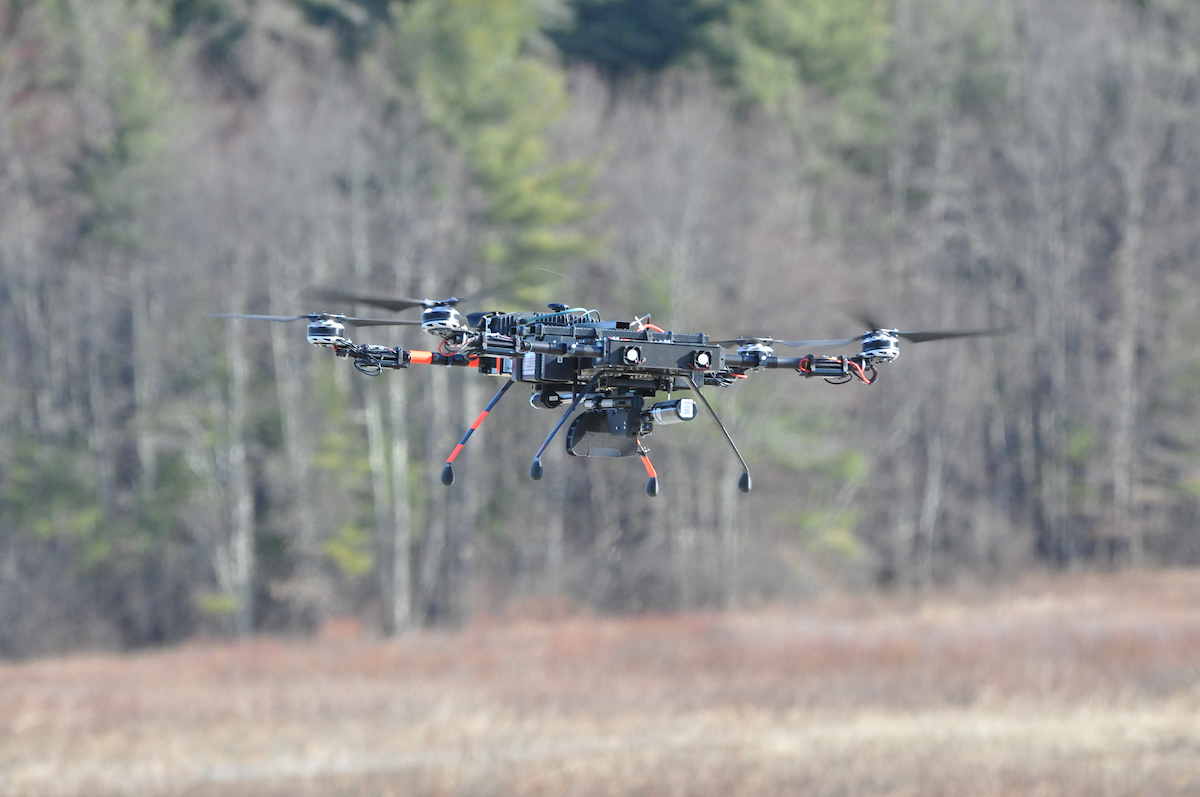
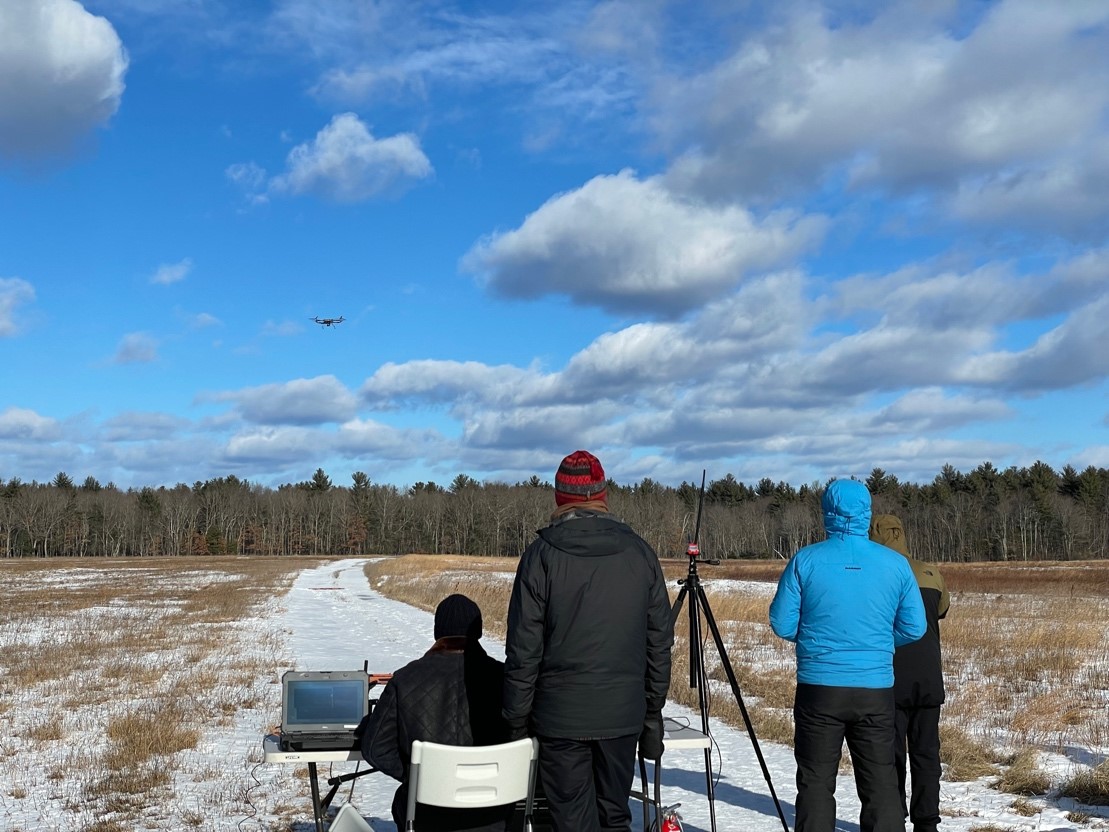
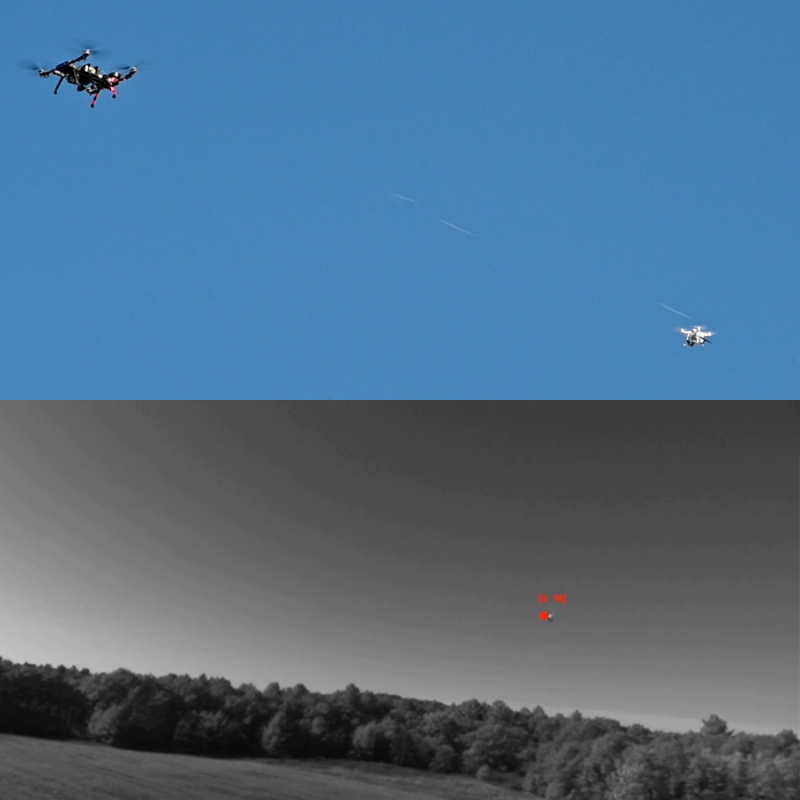
The Modular Intercept Drone Avionics Set (MIDAS) is an AI-enabled counter-UAS interceptor. Cued by ground radar, the multirotor uses an onboard sensor to autonomously find and track an adversary drone, then fires bolo projectiles that tangle the target’s propellers and bring it down with low collateral effects. MIDAS took part in the Pentagon’s first counter-drone technology demonstration at Yuma Proving Ground in 2021.
I developed, integrated, and field tested the target state estimation for MIDAS, built on an EKF with application-specific augmentations, which feeds the vehicle’s guidance, intercept, and firing solution. In the capstone round of testing in 2022, with improved autonomy, agility, and bolos, MIDAS autonomously defeated 83% of small UAS targets.
DARPA LINC: Adaptive Control for Uncrewed Vessels
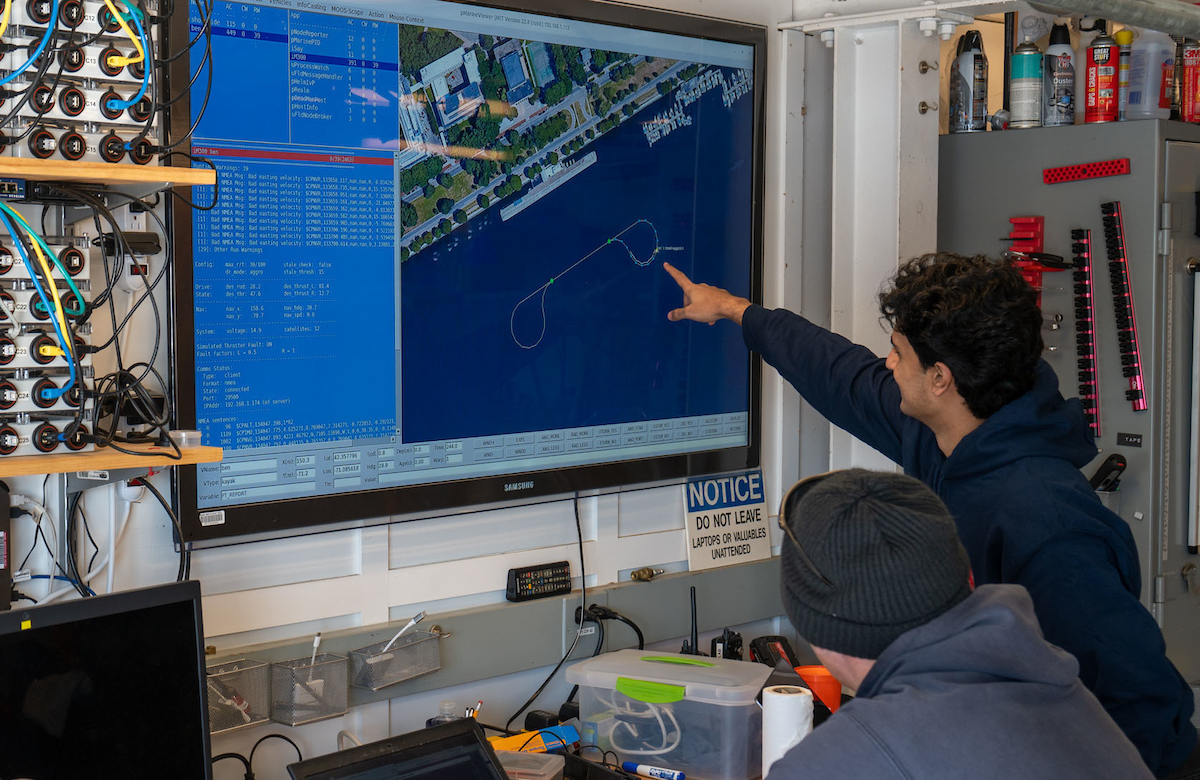
DARPA’s Learning Introspective Control (LINC) program develops machine learning that lets vehicles respond to events not predicted at design time, by monitoring their real-time behavior, comparing it with learned models, and updating their control laws on the fly.
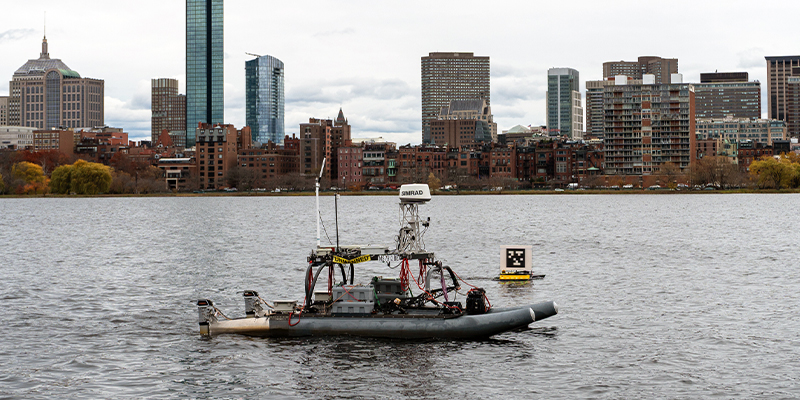
I wrote and architected Aurora’s winning LINC proposal for FALCON (Fast Adaptation and Learning for Control Online), an adaptive model learning and stability control architecture for waterborne and terrestrial vehicles. I left for the Boston Dynamics AI Institute before the program was funded, and the Aurora team, with MIT’s Aerospace Controls Laboratory and Marine Autonomy Laboratory, carried it forward:
- 2023: a 1.5 m uncrewed surface vessel on the Charles River recovered control after a significant loss of one thruster’s effectiveness.
- 2024: testing moved to a 5 m vessel, working toward relative station keeping for underway replenishment with wind, thruster failures, and crane loads.
- 2025 demonstration: time spent in the safe operating zone rose from 63% without AI to 94% with AI-guided control, and recovery time after hazards dropped by 61%.
Other Work
Sensor integration and data logging for a commercial pilot monitoring simulator.